



The "Good Enough" Trap: Why Perfection is Killing Your AI Art
We’ve all spent hours—sometimes days—tweaking a prompt, begging the AI to fix that specific shadow or get the fingers just right. But here’s the uncomfortable truth: you might be chasing the wrong thing.
In 2026, the trend isn't about photorealism. It’s about vibe.
I’ve noticed that the most successful content on platforms like Instagram and LinkedIn isn’t the most technically "perfect" image. It’s the image that tells a story, even if there’s a slight distortion in the background. Audiences are getting tired of hyper-polished, synthetic-looking images. They crave raw, human-like imperfection.
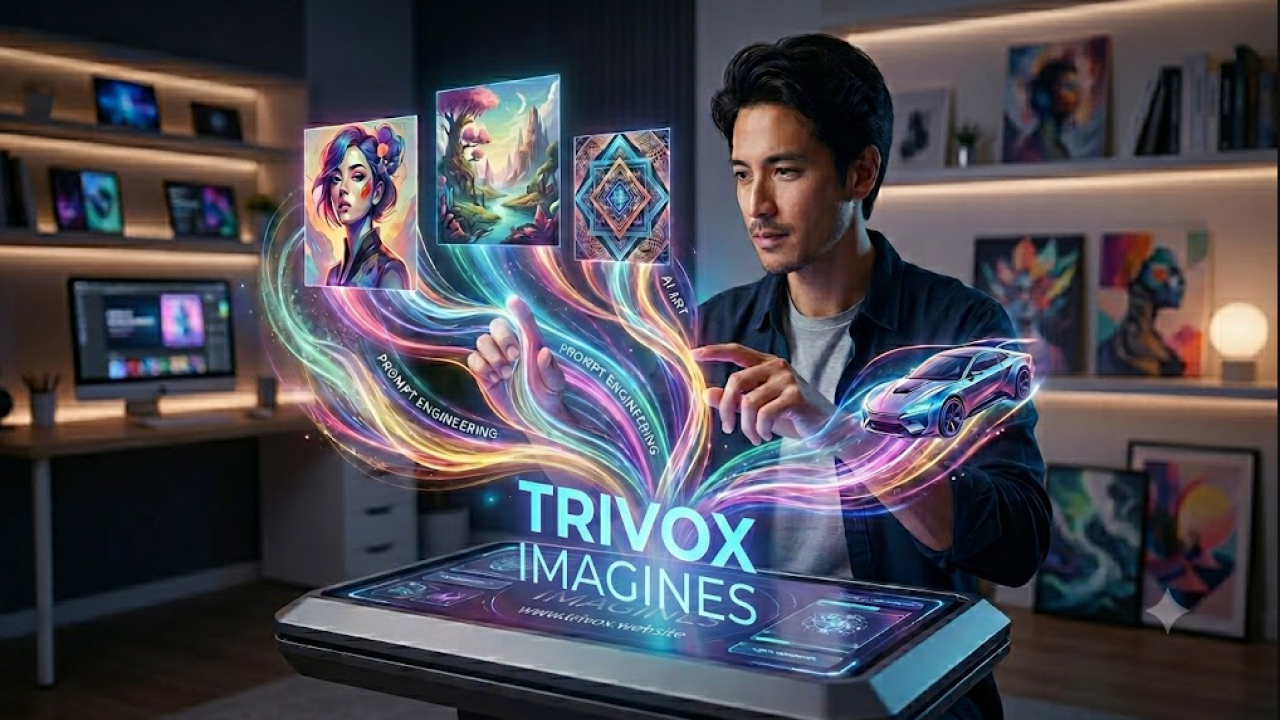
What does this mean for your workflow at Trivox Imagines?
Stop obsessing over the 100th iteration. If the composition hits the emotion you’re aiming for, publish it. Use our tools to generate the concept, but don't be afraid to let it be slightly "human." The future isn't about replacing reality; it's about expanding it.
Next time you open Trivox, try adding keywords like "sketchy," "experimental," or "raw" to your prompt. You might find that your audience connects better with "real" than "perfect."
Article 2
Title: Why AI Art Isn't a Tool—It's a New Language
Most people still treat AI image generators as fancy stock photo machines. They type in a prompt, get an image, and call it a day.
They’re missing the point.
Think about how photography changed art in the 19th century. Painters didn't disappear; they just had to find new ways to express themselves. AI is doing the same thing to us right now. It’s not just generating images; it’s translating intent.
When you use Trivox Imagines, you aren't just "making a picture." You are curating a visual language for your brand.
In 2026, the divide won't be between people who use AI and people who don't. It will be between people who can direct the AI and people who just "click and hope."
The trend is moving toward "Prompt Direction." It’s about understanding light, space, and color theory just enough to guide the machine. That’s the real skill. If you want to stay relevant, don’t just learn the tool—learn how to speak the language.
How are you speaking to the machine today? Drop by Trivox and let’s see if we can push the boundaries of what's possible.





Comments (0)
No comments found